EDITION 15 | September 1, 2026
There is a man named Jake Hall who has built an audience of more than 100,000 manufacturing professionals by saying something that deserves to travel further than it has: AI is not here to replace your people. It is here to make your people more capable.
He is right. And the manufacturers who have internalized that frame are ahead of the ones who have not.
I want to make sure his answer lands.
The Work Underneath
Hall's work lives at the capability layer. Workforce-first, augmentation-framed: how do you attract the next generation into manufacturing, upskill the people already on the floor, and deploy AI in a way that amplifies human judgment rather than displacing it. That is the conversation he is built for, and he has it at a level most in this industry cannot match.
What I do is the work underneath that conversation.
Not instead of it. Underneath it. The work that determines whether the augmentation Hall describes compounds over time or quietly stalls — and whether the leader in the room ever knows the difference.
Here Is What I Mean
Your plant runs three shifts. Your scheduling team has been with you for a combined four decades. They know the machines, the operators, the tooling quirks, the customer commitments that override everything else. They carry the institutional knowledge of your operation in their heads and in habits built over years.
Now someone hands them an AI scheduling tool.
Hall's frame says: this should augment them, not replace them. Keep them. Upskill them. The tool extends their capability; their judgment governs the output.
He is right.
Here is the work that has to be done before that plays out the way it should.
What intelligence does the scheduling tool draw from? Where does the data come from that it is scoring? Who verified the inputs reflect ground truth rather than assumptions baked into your ERP three system upgrades ago? Who owns the output when it conflicts with what your most experienced scheduler knows to be true? What does the override look like? Where does that judgment get recorded so the next shift can act on it?
Those are not workforce questions. They are architecture questions. And the augmentation Hall describes — the version that compounds, the version that actually elevates your people — requires those questions to have answers before the tool arrives on the floor.
Without that work done, the capable people your workforce development invested in are standing on ground that cannot hold what they are being asked to build.
42 Years Watching the Same Sequence
I spent 42 years watching this play out across pharmaceuticals, defense, and energy before the word AI existed. Organizations with exceptional people, serious investment, genuine commitment to their workforce — stalled, not because the people failed, but because the architecture underneath them had never been decided.
What intelligence does the system draw from. What it governs. Who adjudicates when system output conflicts with what the floor knows to be true. How that judgment feeds back in and makes your entire business smarter over time.
The leaders that got it right answered those foundational questions first. Then Hall's answer — keep your people, extend their capability, let human judgment govern the output — compounded exponentially into an advantage no late mover can purchase.
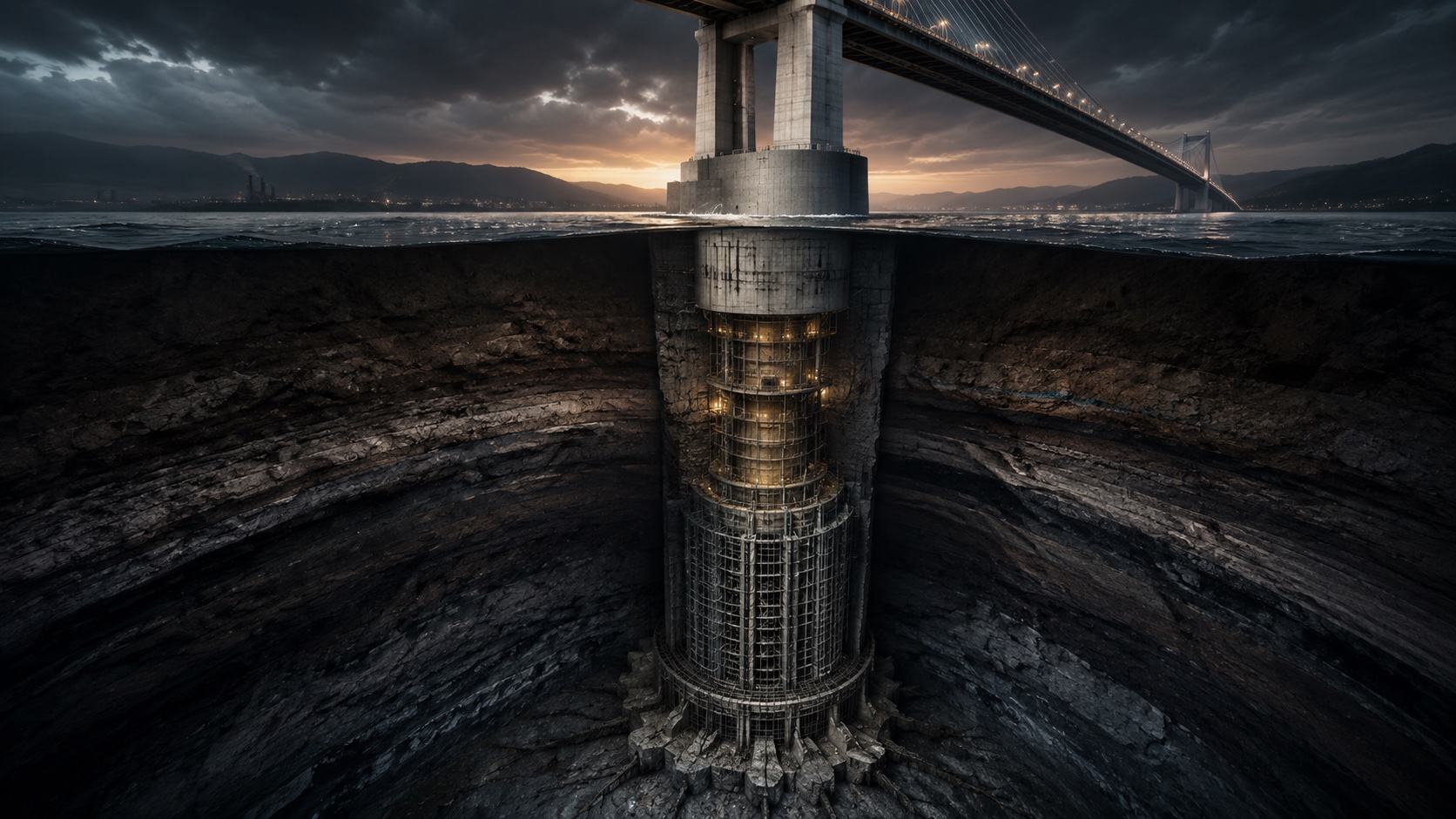
His answer is the bridge. My architecture work is the caisson.
Nobody photographs the caisson. Nobody names it in the highlight reel. But it is what the bridge stands on. And without it, the bridge is not going to be structurally sound regardless of how well it was designed.
October 29, Both Conversations in the Same Room
On October 29, both our conversations will be in the same room.
NEPIRC is hosting its first-ever Advanced Technology and AI Summit at Mohegan Pennsylvania in Wilkes-Barre. Hall is the keynote. The event is free for manufacturers and runs 7:30 a.m. to 12:30 p.m.
I will be there as an exhibitor. If you are a manufacturer who has been sitting with the architecture questions — what must be decided before we deploy, who owns the output when it conflicts with what we know, where does the intelligence go when my people generate it — that is the work I do. I will have a limited number of private conversations available that morning.
To attend: nepirc.com/ai-summit
You Already Had the Instinct
Most of the leaders I work with had the architecture instinct all along. They were asking “but what happens when it conflicts with what my people know?” They were asking “where does that data actually come from?” They were asking “who owns this when it goes wrong?”
They were not confused. They were not behind. They were sensing the caisson work that nobody had named for them yet.
Starting next week, we look at what happens when that work goes undone long enough to show up on a balance sheet. The cost has a name. It has a number. And it has been accumulating whether you knew to look for it or not.
The Diagnostic. The Decision Room.
The Diagnostic exists for the architecture work. One working session. A structured examination of your operation's AI intelligence architecture, the intelligence it is generating, and what closing the governance gap is worth in measurable terms. $750. If that is the work you have been waiting to do: [email protected]
The Decision Room: Strategic AI for the Mid-Market Leader is where the architecture gets built, at your pace. Every enrollment includes two seats — yours and one for the person you would tell about this at the kitchen table. The colleague who should be in this decision with you. $500. carlpeterlin.com/decision-room
Carl J. Peterlin Jr. is the Strategic AI Intelligence Architect™. 42 years of pattern recognition across four technology transitions. Author of It’s All Up For Grabs and Death To Excel! He works with the owners and leadership teams of mid-market manufacturers: businesses that are outgrowing the way they were built.
EDITION 15 | THE FOURTH INTELLIGENCE | carlpeterlin.com