In 1977, a night security guard sold sixty-eight pages of baseball intelligence for $3.50, and the richest teams in the game ignored it for twenty-five years. The intelligence was never the expensive part. The decision was. This film walks through Moneyball in nine innings and one extra, and turns each one on your business: what it already knows that no competitor can buy, why AI efforts fail when the tools come before the architecture, and what to do when everything looks like a failure in the middle.
Score your own nine innings
The Leader’s Box Score
The film asks nine questions. The Box Score turns each one on your business. Answer in your own words, then mark where it stands with your leadership team: decided, open, or never asked. What comes back is the agenda your table has never had, on one page you can hand to the person in the next chair.
Open the Box Score →Nobody grades it. Your answers stay in your browser. One email opens every tool in the library.
The nine innings
- 1The Man Who Saw It1:23
PossibilityWhat would your business become if the knowledge, judgment and capability you have already paid for could work throughout the business? - 2The Gap That Closed4:51
Within reachWhat would you build if you imagined your business fresh, and enterprise AI finally fit your budget? - 3They Graded The Package7:51
Hidden valueWhat intelligence is sitting in your business in plain sight, in the wrong package? - 4The Prospect They Got Wrong10:00
It isn't youWho in your business may hear necessary change as a judgment against the work of their career? How will you bring them into the imagining? - 5It Was Never The Computer14:07
The orderWhich AI efforts have you started before agreeing on the decision, the outcome, and the measure of success? - 6In Front Of The Owner17:14
EvidenceWhat evidence would tell you the change is in a hard middle? What evidence would tell you to change course? When it looks like failure, what will you look at? - 7More Oakland22:42
OwnershipWhat does your business know that a competitor cannot buy? - 8Built In, Not Inspected In26:29
Built inWhere are you inspecting AI in, instead of building it in? - 9The Team That Moved On The Proof28:30
The choiceAre you buying access to intelligence, or building a business that can use it? - XYour Sixty-Eight Pages32:05
Next moveWrite down two things: the decision this story named for you, and the person you want in the next chair when you make it.
Key terms
- Built Intelligence
- Everything your business knows that no competitor does. How it prices. How it makes the part right the first time. Who buys, why, and what keeps them. You paid for it in salaries, in scrap, in lost bids. It is your key competitive advantage. It is not something your business has. It is the business.
- Wonder with Mass
- When you started your business, you had wonder and no mass: every idea was possible, and nothing was in place to carry it. Today you have mass and no wonder: the plant, the customers, the people, the reputation. Wonder with Mass is having both: the feeling of possibility, with everything you have now.
- Scaling Trapped
- More customers, more people, more systems. Revenue up. And somehow the whole thing gets harder every year. The margin stands still while the work multiplies. It feels like a personal failing. It is not.
- Digital Exhaust
- Your quotes. Your changeovers. Your service calls. Your scrap reports. Every day your business produces a record of how it actually works. It vents out of the building every night, and almost nobody captures it. Nobody else has it. Nobody else can buy it.
- Kanter's Law
- Rosabeth Moss Kanter of Harvard Business School: everything can look like a failure in the middle. It does not say every failure is a middle. The only difference between stubbornness and conviction is evidence.
- Catch-Up Penalty
- The price late movers pay for intelligence early movers already use. Late movers do not buy an advantage. They pay for permission to compete. Move first, and the penalty does not disappear. It changes hands. Your competitors pay it to you.
Questions this film answers
What is the $3.50 decision?
In 1977, Bill James sold sixty-eight pages of baseball analysis for $3.50 a copy. About seventy-five people bought one. For twenty-five years, the front offices of baseball graded the package and ignored the intelligence. The decision to act on it, not the intelligence itself, was the expensive part.
What is Built Intelligence?
Everything your business knows that no competitor does. How it prices. How it makes the part right the first time. Who buys, why, and what keeps them. You paid for it in salaries, in scrap, in lost bids. It is your key competitive advantage. It is not something your business has. It is the business.
What is Kanter's Law?
Rosabeth Moss Kanter of Harvard Business School: everything can look like a failure in the middle. Every real change passes through a stretch where the new way is half-built and the old way is half-gone. Kanter's Law does not say every failure is a middle. The only difference between stubbornness and conviction is evidence.
Why do most AI efforts fail?
When the tools come before the architecture, the tools fail, and good leaders blame themselves. One MIT study of generative AI investment found 95% of companies reported zero return. That is a pattern, not a verdict on the leaders. The order is the problem.
What is the Catch-Up Penalty?
The price late movers pay for intelligence that early movers already use. Late movers do not buy an advantage. They pay for permission to compete. Move first, and the penalty changes hands: your competitors pay it to you.
What is Strategic AI Intelligence Architecture?
The discipline of architecting the business first, so AI finally works for it. Carl Peterlin named the discipline and works with the owners and leadership teams of mid-market manufacturers: businesses that are outgrowing the way they were built.
Chapters
- 0:00AI Is New. The Journey Is Not.
- 1:231st: The Man Who Saw It
- 4:512nd: The Gap That Closed
- 7:513rd: They Graded The Package
- 10:004th: The Prospect They Got Wrong
- 14:075th: It Was Never The Computer
- 17:146th: In Front Of The Owner
- 22:427th: More Oakland
- 26:298th: Built In, Not Inspected In
- 28:309th: The Team That Moved On The Proof
- 32:05Extra Innings: Your Sixty-Eight Pages
Go deeper
 Edition 10: Moneyball With 2026 EyesThe edition this film grew from.
 Edition 13: Built In, Not Inspected InThe 8th inning, in full: the quality discipline you already run, applied to AI.
 Edition 14: Digital ExhaustYour sixty-eight pages, and where they go every night.
 Edition 18: You're Paying the Catch-Up PenaltyThe arithmetic of waiting, and how the penalty changes hands.
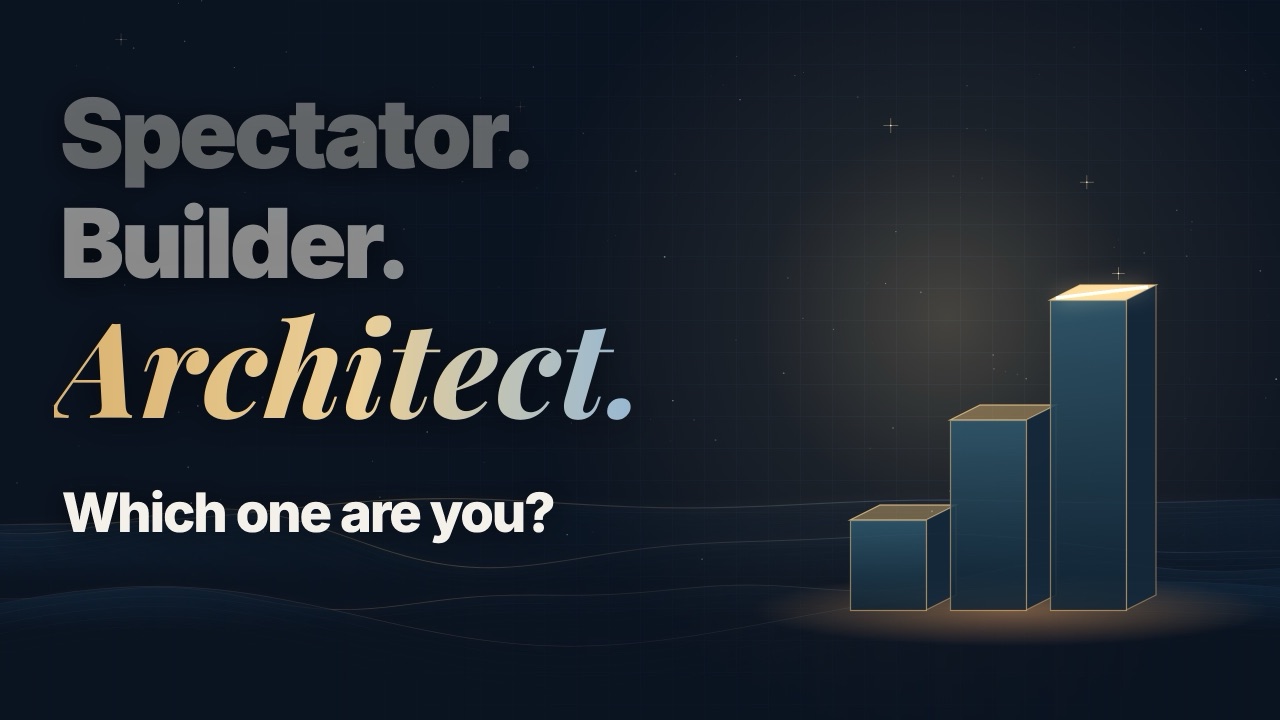 Video: The 3 Types of AI LeadersThe Spectator, the Builder, and the Architect.
Where to go from here

Find your order
Strategic AI Intelligence Diagnostic™
One working session with Carl: the cost, the capital, the company, and the first move. What the current way is costing you, in dollars. The federal capital your business already qualifies for. And the first move toward the business you could become. $750. No tools to sell you.
Find your order →
Bring your team into the room
The Decision Room: Strategic AI for the Mid-Market Leader
The decisions that come before any tool, made with the person you would tell at the kitchen table. $500, includes one guest seat.
Enter The Decision Room →
Full transcript
Read the transcript
AI is the newest thing you will ever lead. The way you'll win with it is one of the oldest stories in business.
For the first time, a business your size can afford the kind of intelligence only the largest companies on earth could buy. Picture it running in yours. The quote goes out while the customer is still deciding. Every job teaches the next one. What your best people know stays in the building after they go home.
But the road to that company is not new.
In 1977, a night security guard wrote down something the richest organizations in baseball could not see. Sixty-eight pages. He sold copies for $3.50. Almost nobody cared.
Twenty-five years later, a general manager with one of the smallest budgets in the game finally acted on it. They laughed at him too. And early that season, losing, he had to stand in front of the owner and defend the plan.
The film is Moneyball. It is about baseball. It is far more about you.
Because the hardest part was never the intelligence. It was the decision. Beane had to make it. So do you.
I'm Carl Peterlin. Nine innings, and one extra. Let's go.
I'm a Strategic AI Intelligence Architect. I work with the owners and leadership teams of mid-market manufacturers: businesses that are outgrowing the way they were built.
If that sounds like your business, keep it in mind as we go. That's the company I want you to see in this story.
Let's start where the film does.
Moneyball opens on a payroll gap. The New York Yankees could spend about three times what the Oakland Athletics could.
Everyone in baseball looked at that gap and saw the same thing. A team that could not win.
Billy Beane, Oakland's general manager, looked at the same gap and saw something else. Not a cheaper version of the Yankees. A team nobody had built yet.
That's where I want to start with you, too. Before we talk about a tool, what is the company you can see that doesn't exist yet?
There's something the movie gets right that business books often pass over. Seeing it first can be a lonely place to stand.
You may recognize that room. The same table where you've made a thousand decisions. The people around it are good people. You hired most of them. Some have been with you twenty years. And you are describing a company they cannot quite picture yet.
Not because they lack judgment. Because they are looking at the business you have, and you are describing the business you could become. You have spent years trusting their judgment. Now you are asking them to question part of it. And you are the one who signs the checks.
I call the feeling underneath all of this Wonder with Mass. Let me explain what I mean. When you started this business, you had wonder and no mass. Every idea was possible, and nothing was in place to carry it. Today you have mass and no wonder. The plant, the customers, the people, the reputation.
Everything in place, and gravity pulling in every direction. Nobody has ever had both. That slowness you feel is not decline. It is proof you succeeded. I'm not suggesting you want your youth back. You want that feeling of possibility, with everything you have now. That is not behind you. It is in front of you.
Now picture one person in your building. Your estimator. Twenty-seven years. He knows which jobs you can win, which customers pay late, which tolerances cause trouble, and which work you should turn down. Most of that lives in his head and in that notebook. Picture a company where his judgment reaches every quote, on every shift, even on the days he is on vacation.
Keep him in mind. We're going to come back to him, because this gets much clearer when we're talking about a person whose judgment you already trust.
Here is what makes Beane's story strange. The raw numbers he needed had been printed in the newspaper, every morning, for about a hundred years. The box scores. Free. In plain sight.
For a hundred years the intelligence was free. Only the decision was expensive.
And early that season, that decision put him in front of the owner, losing. We'll get to what happened in that room.
Payroll decided who could buy the stars. It no longer decides who can buy intelligence.
For most of your career, the best intelligence was a payroll item. If you wanted forecasting, pricing models, a team that could see what was coming, you hired it. The Fortune 500 could. You could not. That was the arithmetic, and you built a business anyway.
That arithmetic broke.
Within two years of ChatGPT's launch, the cost of the same AI capability fell more than 280-fold. That is Stanford's number, from their annual AI Index.
And the mid-market has an advantage the giants do not. In MIT's research on companies putting generative AI to work, the mid-market leaders who get it right go from pilot to full use in about ninety days. The largest enterprises take nine months or more.
Now let's bring that back to your floor. The estimator with twenty-seven years in a spiral notebook. The scheduler who knows which machine runs hot on Thursdays. The service manager who can hear a bearing failing before the sensor can. For the first time, what those people know can be built into the business itself, at a price a business your size can pay.
But the road to it is not new, and the oldest proof comes from your own industry. When factories traded the steam engine for the electric motor, most of them put the motor where the steam engine had been, and the productivity numbers barely moved. The ones that pulled away redesigned the whole floor around the new power.
Every innovation since the printing press has made leaders the same offer, and tested them the same way.
I've spent forty-two years watching that test play out, across four technology transitions. AI is the fourth. The technology changes. The test does not.
So let me ask you this.
What would you build if you imagined your business fresh, and enterprise AI finally fit your budget?
Not a different company. Yours. Your customers, your people, your floor. Imagined fresh, and built in motion. No shutdown. No starting over.
That is exactly what Beane did. He could not outspend the Yankees for the players everyone wanted. So he stopped asking how to compete with their budget, and started asking what game he could win that they did not know they were playing.
Everyone else was buying players. Beane was buying runs.
Beane couldn't afford the players. So he changed what he was buying.
Hold on to that stack of paper from the beginning. Yours is arriving the same way. Before the last inning, we'll open it.
So where did the intelligence come from? This is one of my favorite details in the story. It didn't come from a laboratory, a consulting firm, or a front office.
In 1977, a man was working the night shift as a security guard. At the Stokely-Van Camp's pork and beans cannery. In Lawrence, Kansas.
On those night shifts, he studied baseball's own numbers. The same box scores sitting in every newspaper in America. And he saw what the professionals could not. That much of what baseball paid for did not win games. And some of what it ignored did.
He wrote it up. He copied it. Sixty-eight pages.
He sold it through a classified ad in a sports newspaper. $3.50 a copy. About seventy-five people bought one.
His name was Bill James.
And for most of the next twenty-five years, the front offices of baseball, some of the best-funded talent operations in American sports, did the same thing with that intelligence.
They graded the package.
A copied stack. A want ad. A night watchman. Who was going to take that seriously?
I don't want you to hear this as a story about foolish scouts. They were not fools. They were very good at a game that was quietly ending. Every one of them had spent a career learning to see talent with his own eyes. And here was a night watchman telling them their eyes were the problem.
Of course they laughed. Nobody laughs harder than the man whose paycheck requires the joke to stay funny.
Twenty-five years later, Beane read the intelligence instead of the package. And in 2002, the Oakland A's won 103 games, including twenty in a row, an American League record.
The Yankees spent about three times as much. The intelligence that broke their fifty-five-year-old record cost $3.50.
There is a reason Beane could see what the scouts could not. And it is the most human part of the story.
Billy Beane was once exactly what the scouts loved. Fast. Strong. Looked the part. The kind of prospect they called can't-miss. The New York Mets took him in the first round of the 1980 draft, and he turned down Stanford to sign.
And he missed. The career they promised never came. The old system graded him as a sure thing, and the old system was wrong.
Think about carrying that around. Years of believing the failure was yours, when part of it belonged to the way you were judged. Beane did not walk into the general manager's office as a genius. He walked in as the old system's most expensive mistake.
I want to pause there, because you may recognize something in that.
I call it AI Anxiety. The pressure to have AI, and the private suspicion that it isn't working. You may not use that name for it. But you may know the feeling.
Your board asks where your AI is. Your customers ask about it. Your competitors claim it. You sat through the demo that looked brilliant, signed the subscription, and watched it go nowhere. And somewhere in the quiet after the meeting, a thought shows up. Maybe it's me.
If your business has grown, that thought gets louder. More customers, more people, more systems. Revenue up. And somehow the whole thing gets harder every year. The margin stands still while the work multiplies. There's a name for that: Scaling Trapped. Bigger, and every year, somehow, harder. It feels like a personal failing. It is not.
It is what happens when a business outgrows the way it was built.
It isn't you.
One MIT study looked at companies investing in generative AI. 95 percent reported zero return. That is not 95 percent of leaders failing. That is a pattern. When the tools come before the architecture, the tools fail, and good leaders blame themselves.
You are not behind. You are out of order.
And there's another part of this that I don't want to hurry past. Your people.
Think about your estimator again. He worked the Saturdays when you needed him. He saved the customer nobody else could save. He helped make this business what it is. And now you are asking him to rethink some of the very habits that made him valuable.
You may mean it as an opportunity. He may hear it as a verdict on his career. That's a very different conversation from the one you thought you were having. His experience has never mattered more. It matters too much to stay locked in one head and one notebook.
That is the turn most AI efforts miss. Your best people are not standing in the way of the next company. They are the intelligence it will be built on. This is why I want your people involved in imagining the new business. Especially the people whose experience made the old way work. They need a part in shaping what comes next.
Beane faced a version of this, and he did not always handle it gently. His scouts had given their lives to the game. You will face it too. And the measure of your leadership will not be whether everyone agrees with you on the first day.
It will be whether you can lead those people into something stronger without forgetting what they gave to get you here.
If you're carrying that doubt, I want you to remember this. Beane stood here. Other leaders have stood here, wondering whether they could build what they could see.
You're not the first one here. You're the next one.
You may be thinking, all right, but Oakland had computers. They had analytics. Wasn't that the difference?
Look a little closer.
In the film, Beane's partner is a young analyst named Peter Brand, the movie's version of Paul DePodesta. He has a laptop. And any front office in baseball could have bought the identical machine that same afternoon.
Twenty-nine teams could buy the laptop. One changed the order.
Oakland did not win because it had a tool the others lacked. It won because Beane made a short list of decisions before he bought a single player. What actually wins. What to stop paying for. What a win costs. What gets measured, and by whom. The roster came last.
In the film, there is a scene in the scouting room. A long table of men who have watched baseball their whole lives, debating which players look the part. And Beane stops them. They are trying to solve the wrong problem, he tells them. The problem is not replacing the players they lost.
The problem is that the way they think about players cannot win.
That is the moment the order changed. Not when a computer came in. When a leader refused to let the room keep asking the old question.
Now compare that with the way businesses are buying AI. I call it Bolt-On AI. Tools bolted onto a business that was never architected for them.
You may already have a version of this in your business. A chatbot answers the customer, and the answer is wrong, because the pricing logic still lives in your estimator's head. You cannot automate judgment nobody has defined. An AI scheduling tool goes live on top of a process that was already broken.
Bolt AI onto a broken process and you get a broken process at AI speed.
The tools aren't the problem. The order is.
That idea is at the center of my work. I call the discipline Strategic AI Intelligence Architecture. Architect the business first, and AI finally works for you.
And watch Beane's very first move. Before he signed a hitter, before he traded for a pitcher, he hired a partner. The second chair came before the roster. Beane did not try to make the decisions alone.
Every team in baseball eventually got a Pete. Only one had a Billy first.
If you're starting to recognize these decisions in your own business, I built a place where you and your leadership team can work through them together, in the right order. It's called The Decision Room, and it's linked below.
Remember this, too. One team in this story moved on the proof before anyone else, and it was not Oakland. Hold that. First, what happened when Beane's decisions started to look wrong.
The software installs in a day. The order takes a season to find.
This is the part I want us to spend some time on. When Beane's new approach took the field, it did not work. Not at first.
The A's won fifteen of their first twenty-five games. Then they lost sixteen of the next twenty-one. By late May, they had won twenty and lost twenty-six.
The film tells the rest the way it felt. The press questions him. His own clubhouse questions him. His manager keeps playing the lineup the old way, so Beane trades away the manager's favorite first baseman to put his own choice on the field. The real season was messier and slower than the movie. The feeling is exactly right.
And then there is the room. The film puts Beane in front of the owner, with the season going badly, having to persuade him to trust the plan. The money is spent. The results are bad. And underneath every word is one question: do you actually know what you are doing?
Put yourself in that room for a moment.
You made the decision. You changed the order. You asked your people to trust something they cannot see yet. And now the first numbers are in, and they look worse than the old way. Everyone who doubted you is quietly keeping score. And you may be the only one in the building who still believes the plan.
And it is not only your neck on the line. Your people are watching you. The machinist who wonders whether the new system is coming for his job. The supervisor who stayed late to learn it. Their families at the kitchen table, hearing about it over dinner. You're carrying responsibility for all of them.
Abandon a sound change too soon, and people can learn that the next one can be waited out. But keep going without evidence, and they're the ones who live with the consequences, too.
Rosabeth Moss Kanter, at Harvard Business School, gave this moment a name. Kanter's Law. Everything can look like a failure in the middle.
Every real change passes through a stretch where the new way is half-built and the old way is half-gone. From the inside, that can look exactly like failure.
But I want to be very clear about what Kanter's Law does not say. It does not say every failure is a middle.
Sometimes the strategy is wrong. Sometimes the tool is wrong. Sometimes you asked good people to do something you never prepared them to do. From the outside, stubbornness and conviction look identical. The only difference between them is evidence. And if you cannot tell which one you are looking at, you are not leading a transformation. You are gambling.
Picture it on your floor. The first quotes the new system drafts miss the jobs your estimator would never have taken. Is that the system failing? Or is it the first time anyone has seen, on paper, the judgment he carries in his head? You need a way to answer that question.
And the time to decide what evidence you'll use is before you start, while you can still agree on it without defending the results.
That is why the decisions come first. Before you buy the software. Before you announce the initiative. Before you ask people to change the way they have worked for twenty years. You decide what you are trying to accomplish, what evidence will tell you it is working, and what evidence will tell you to change course.
What steadied Beane was not faith. He had decided what he was measuring, and why, before the losses came. So when the standings looked wrong, he knew what to look at instead.
I've stood in that middle across those four technology transitions. I've watched what could have been, and I've watched what actually happened.
What stays with me is the responsibility in that room. The plan matters. But the plan cannot answer for you when people ask whether to keep going. You have to know what you're holding to, and what would make you change your mind.
That's what I want you to have before you get there.
You may already have been in your own version of that room. If you haven't, one day you will be. The numbers will not be where you want them. Someone will ask whether this whole thing was a mistake. And you will have to answer. Not with enthusiasm. Not with a demonstration. With evidence.
That's why I build the architecture in stages. Every stage ends at a gate, with the return in front of you. Beane walked into that room with conviction. You walk into every gate with the numbers. And you decide at every gate.
Bad results in the right order are tuition. Good results in the wrong order are a loan.
And when I say tuition, I don't mean a blank check. It is paid against a lesson you named in advance.
And then, in August, something started that nobody in baseball had seen in fifty-five years.
Oakland didn't become a cheaper Yankees. It became more Oakland.
That's the possibility I want you to see for your own business. Beane did not try to copy the richest team in the game on a smaller budget. He built a team that could only have come from Oakland's situation, Oakland's constraints, Oakland's willingness to see what others ignored.
Here's how I put it. AI ought to make your business more itself, not more like everyone else's.
I call what makes that possible Built Intelligence. Everything your business knows that no competitor does. How it prices. How it makes the part right the first time. Who buys, why, and what keeps them. You paid for it in salaries, in scrap, in lost bids. It is your key competitive advantage. It is not something your business has. It is the business.
Bolt that into the same tools everyone else bought, and something quiet and dangerous happens. Give it away and nobody has to beat you. They only have to copy you.
Which is exactly what happened to Oakland.
Beane's edge was built on public box scores. Anyone could read them. And once the book about his method came out, everyone did. Paul DePodesta, the real analyst behind the film's Peter Brand, left to run the Los Angeles Dodgers in February 2004.
Economists who studied the market found that baseball corrected the mispricing Beane exploited within about two seasons. The intelligence had a name and a salary, and it could take a job with a competitor.
Your situation is different in one enormous way.
Your quotes. Your changeovers. Your service calls. Your scrap reports. The reasons jobs make money, and the reasons they don't. Every day your business produces a record of how it actually works. That record has a name: Digital Exhaust. It vents out of the building every night, and almost nobody captures it. Nobody else has it. Nobody else can buy it.
Your box scores are private.
Now, having the record isn't the same as being able to use it. That's a distinction I want to make carefully. A thousand spreadsheets do not become intelligence because you connect them to AI. Someone has to decide what matters. Someone has to make sure the record can be trusted. Someone has to build a way for the business to learn from what happened.
That is the opportunity. Not to buy a smarter machine. To build a company that becomes smarter every time it works.
Now picture the day your estimator retires. Twenty-seven years of knowing which customers pay late, which jobs run twice, which material lots cause trouble. If you've never captured that judgment, the morning after the retirement party is a difficult time to discover how much of it left with him.
In a business that has architected for it, it is still there. Still pricing. Still learning. And it stays yours. What your business knows does not leave the building.
Picture the version of your company where that record stays in the building and learns. Where what your best people know becomes something the business owns. That company is not a fantasy. It is the one you are already sitting on.
Let me bring this back to something you already know. You may never have applied it to AI, but you've applied it on your floor for years. Plenty of technology companies are still learning it.
Quality is built in, not inspected in. W. Edwards Deming spent a career teaching it, and manufacturing built a discipline on it.
You know what happens when a process makes defects all shift and someone tries to catch them at the end. You pay for the mistake twice. Once when you make it. Again when you find it.
You are doing TQM all the time. You are not doing it with AI.
Look at how most AI gets bought. First the technology. Then a search for somewhere to use it. Then, months later, a question about whether it created any value. That is inspection. It is running the line without a process capable of making the part, and trusting the inspection station to sort it out afterward.
And it is how businesses end up paying for AI twice: once for the tools, and again to rebuild what they were bolted onto.
Think about your own purchases this year. How much software did your business buy that nobody measured? A tool for marketing. A tool for scheduling. A pilot somebody championed and nobody owned. Each one bought, run, and checked later. Each one a part that came off the line without a spec.
The scouts inspected talent after the fact, with their gut. Beane built the season in, upstream, before opening day. You already believe his method. You have spent years building quality into your own process. Now it is time to bring that same discipline to intelligence.
Judgment cannot be bolted on. It must be built in.
The streak started in August. Win after win. By the twentieth game, the A's were chasing a record that had stood for fifty-five years.
And that night, they nearly threw it away. They led eleven to nothing, and watched every run of it disappear. Then, in the bottom of the ninth, Scott Hatteberg, an injured catcher the old system had written off and Oakland had turned into a first baseman, came off the bench and hit the home run that won it. Twenty in a row.
103 wins. And then, in the first round of the playoffs, they lost.
Remember I said another team moved on the proof? This is where they come in.
That winter, the Boston Red Sox offered Beane the richest contract ever offered to a general manager. Five years. $12.5 million. He said yes. Then he said no, and stayed in Oakland.
Boston did not wait for him. They hired Bill James, the night watchman from the cannery. But they did not only hire the man who wrote the intelligence. They started building an organization that could use it, decision by decision, across the front office.
Oakland showed what was possible when one leader questioned the old assumptions. Boston showed what happens when that way of thinking becomes part of how an organization decides.
Two seasons later, the Red Sox won the World Series for the first time in eighty-six years.
The team that proved it never got the ring. The team that moved on the proof did.
That's the distinction I'd ask you to look at in your own company. Are you buying access to intelligence? Or are you building a business that can use it?
Watch the price of that intelligence over time. In 1977, it cost $3.50. By 2002, Boston was hiring the man who wrote it. In the years that followed, front office after front office built analytics departments of their own, not to get ahead, but to stop falling behind.
The same intelligence, at a price that climbed every year a team waited.
That's the Catch-Up Penalty. Late movers do not buy an advantage. They pay for permission to compete. And here is the part that should change how you see it. Move first, and the penalty does not disappear. It changes hands. Your competitors pay it to you.
Picture your estimator a few years from now. Still there. Still the best judge of a job in your building. But his judgment now reaches every quote, and the business learns from every job he touches. Your company has not become a copy of anyone. It has become more itself.
That is the moment this whole story has been pointing at.
At some point, you stop letting change happen to your business and start choosing it. Nothing else has to change in that moment. Not the budget. Not the competition. Not the technology.
You stop chasing AI and start architecting it.
Nothing changes in that second except whether it was chosen.
I promised we would open your stack of paper. Here it is.
In 1977, the most valuable intelligence in baseball arrived as a want ad and a copied stack. It looked like nothing. That is why the experts missed it.
Yours is arriving the same way. Off your floor. Out of your quotes, your changeovers, your service calls, the estimator's notebook, the scheduler's instinct. It looks like paperwork. It looks like nothing. And somewhere in your market, someone is deciding whether to read it.
Here's what I want you to take with you. Everything you have spent your career learning still matters. The way you price. The way you protect a customer. The way you know a good job from a bad one before the drawings are dry. AI has not made that experience obsolete.
It has made it possible to put that experience to work in ways that were never possible before. And you are the person with both the responsibility and the understanding to lead it.
So here is the question I want to leave with you.
Who better than you to lead this in your business?
Hold that question. Do not answer it yet.
Before you close this video, write down two things. The decision this story named for you. And the person you want in the next chair when you make it.
Here's what I do.
Everybody's selling AI tools. That's tactics.
I work with you on the strategy and the architecture that runs it, so AI becomes your competitive advantage instead of an expense. And I can tell you, in dollars, what every month you wait is costing you.
Our work together runs in a simple order. First, set your strategic foundation. Then architect it, inside the business you are running today. Then build on it, so every tool you add from that day forward has something solid to stand on.
The first step is one working session with me. The Strategic AI Intelligence Diagnostic. Your cost: what the current way is costing you, in dollars. Your capital: the federal capital your business already qualifies for. And your first move. It is $750, and I have no tools to sell you. Find your order at carlpeterlin.com.
In 1977, an entire industry looked at the most valuable intelligence it would ever see, and graded the package.
Yours is on the table now.
Will you grade the package? Or will you read the intelligence?